Day Seventeen
City of Rocks, Golden Spike
Through some advanced planning, we have outlined a route today that will take us from our first stop, City of Rocks National Reserve to the Golden Spike National Historical Site via dirt roads, including a portion of the original railroad bed. But first we have to get to the City of Rocks!
The City of Rocks National Reserve, the first in U.S., rivals Yosemite for its climbing resources. The reserve resembles a giant city in rock. There are towering structures, most resembling giant boulders scattered across the ground. It is located in a relativly remote area, the visitor center is located outside of the reserve in Almo, and all the roads are gravel. Be prepared for rough conditions, but the drive to the reserve is very scenic, a change from the dry, hot Snake River Valley. It is located almost at a mile high. Outside of rock climbing, there are many things to do, if you venture out this far. There are many species of birds to be seen here as well as elk and mule deer. Hiking and camping are also favorites, but one of the most interesting sites is Register Rock. The California trail traverses the reserve, and many of the imigrants who passed through left their names and dates of passage usging axel grease on this rock.
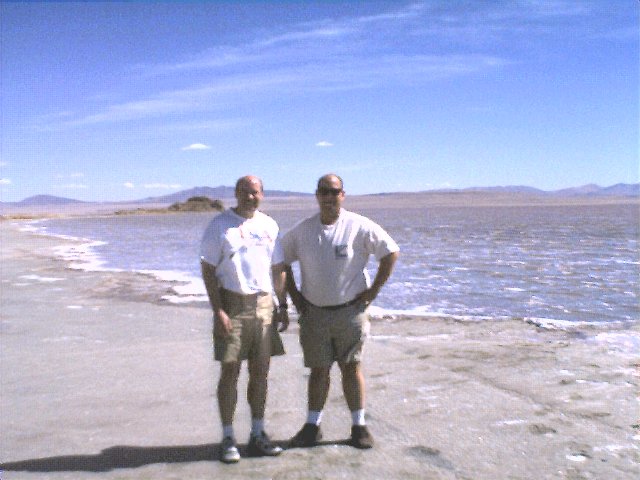
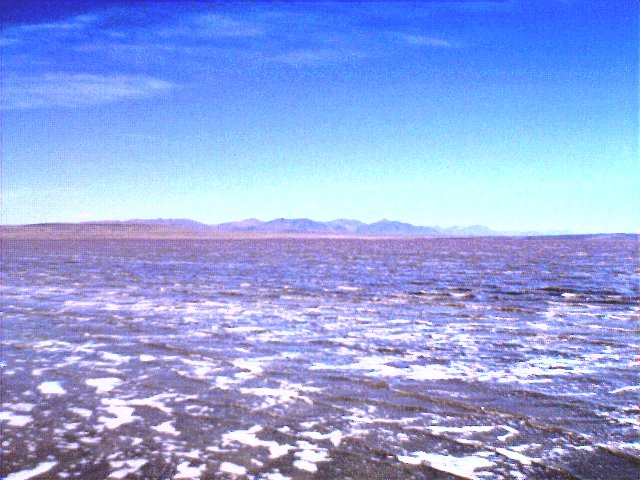
 Leaving City of Rocks, we travel east on back dirt roads through the interesting town of Naf. While not really a ghost town, the twon consists of only three buildings, including one interesting Naf Mercantile, a through back to the turn of the century. After a brief encounter with 'civilazation' on a paved road and travelling through a real ghost town (a town just abandoned, with all the buildings torn down), we get back on dirt roads heading south and junctioning with the old railroad grade that formed the first transcontinental railroad. I should mention that we are travelling with many paper maps, as well as a laptop gps unit. This helps in navigating the many dirt roads, which some look like more trails than roads. Its helps us stay on the right one. Its not necessary to have a gps unit, but a good paper map like the Delorme Utah atlas, would be helpful. We travel on the railroad bed for about 10 miles and it is very rough, full of pot holes and very washboardy. Just before entering the railroad bed I had noticed a road, which looked like it was in better condition paralleling it. As we travel along, there are "turn offs" which leave the elevated bed and connect with this road. We decide that we would probably make better time on that road, so we abandoned the rail bed and take that road. Leaving City of Rocks, we travel east on back dirt roads through the interesting town of Naf. While not really a ghost town, the twon consists of only three buildings, including one interesting Naf Mercantile, a through back to the turn of the century. After a brief encounter with 'civilazation' on a paved road and travelling through a real ghost town (a town just abandoned, with all the buildings torn down), we get back on dirt roads heading south and junctioning with the old railroad grade that formed the first transcontinental railroad. I should mention that we are travelling with many paper maps, as well as a laptop gps unit. This helps in navigating the many dirt roads, which some look like more trails than roads. Its helps us stay on the right one. Its not necessary to have a gps unit, but a good paper map like the Delorme Utah atlas, would be helpful. We travel on the railroad bed for about 10 miles and it is very rough, full of pot holes and very washboardy. Just before entering the railroad bed I had noticed a road, which looked like it was in better condition paralleling it. As we travel along, there are "turn offs" which leave the elevated bed and connect with this road. We decide that we would probably make better time on that road, so we abandoned the rail bed and take that road. The one nice thing about the rail road bed is that it is elevated about 4-5' above the surrounding terrain. This road is also very close to the Great Salt Lake, so we make a brief visit. The one nice thing about the rail road bed is that it is elevated about 4-5' above the surrounding terrain. This road is also very close to the Great Salt Lake, so we make a brief visit.
Soon we entered the Golden Spike National Historical Site. The site commorates th joining of the first transcontinental railroad on May 10, 1869 by the Central Pacific Railroad and the Union Pacific Railroad. The story of why this was the place is a rather interesting one. The two railroads were given subsidies by the government for each mile of track that they laid. So, each company, not having a contract for a meeting point, actually passed one another by 200 miles! When congress heard about this, they declared that they would meet at Promontory Summit. The sites visitor center functions as the main museum as well. There are several feature films to see, browse through artifacts about the building of the railroads, and see a re-enactment of the ceremonies that took place on that morning. Siteseers are invited to join in as participants, too. That in itself is very educational. For those travelling between Salt Lake City and the north, this is an easy stop off of the highway.
Travelling back to Boise on the same route we took earlier this week, we stopped for dinner and a peak at Evel Knievels 'Sky Cycle' (there because it was the 25th aniversary of his attempt to jump the Snake River Canyon) in Twin Falls (known locally as just 'Twin').
|