Day Four
Arizona and Mexico
Our computer problems have left us to only be able to upload rudimentary updates in the morning and in the evening when we have returned to our homebase. But, we are not going to let this effect the trip. We have a lot to do, and today is the first day that we actually begin doing the things that we have been planning on for months. The show must go on as they say!
Since we are so close to the Mexican border, what trip would be complete with out a visit? Its there so we had to go! We parked our car at a lot located in the U.S. in Nogales, AZ. This is actually the best way to go...you park your car saftly in the U.S. and walk into Mexico which is only a few blocks away. It costs $5, but there is the obligitory "tip" to have the attendant watch your car. Its a little like extortion, but when you consider the final cost of under $10, its really not that bad. Of course, you can forego the 'tip', but that's up to you. There is no customs or any other check crossing into Mexico, as all you need to do is walk through a rotating door in a fence and you're in. Getting back into the U.S. is another matter. Once in, it was a little like a fair where people walk up to peddling their merchandise and offering services. Unfortunatly, we wound up being followed by this fellow who had recently been deported from the U.S. We found the best tactic to get rid of this guy (or anybody else for that matter) was to walk into a store. Browsing is free and the merchant would not allow for someone to be bothering his customers. All in all, we didn't buy anything just because we knew that we would be on the road for three weeks and our bags were going to be so full of other stuff that we wouldn't have room. So, the purpose of this visit was mainly to say that we were there and we were.
One of our main goals on this trip is to attempt to visit as many National Park Service areas as possible and our next stop was right on the menu. We visited Tumacacori National Historical Park. This was an old Jesuit and Franciscan Mission loacted in southern Arizona. The mission was created in 1691 and was closed in 1848. This site represents an interesting period in American history. This an other missions represented some of the earliest settlements in America. Visiting the mission takes about an hour depending upon how much time you want to spend going through the museum, walking through the old structures and touring the gardens. The museum has several artifacts on display including some original writings of some of the brothers to their relatives in Europe. You can also read the replys they got almost a year latter. In the old structures, you can still see paint on the walls and displays showing what those walls looked like when they were new. Like many western structures, it is also evident that they were 'recycled' in their use long after they were abandonded. Its worth a visit if you're travelling through this area as its two minutes off of I-19, and you could just visit the Visitor Center where they have some great displays. This would make for a more interesting rest stop then the normal highway areas.
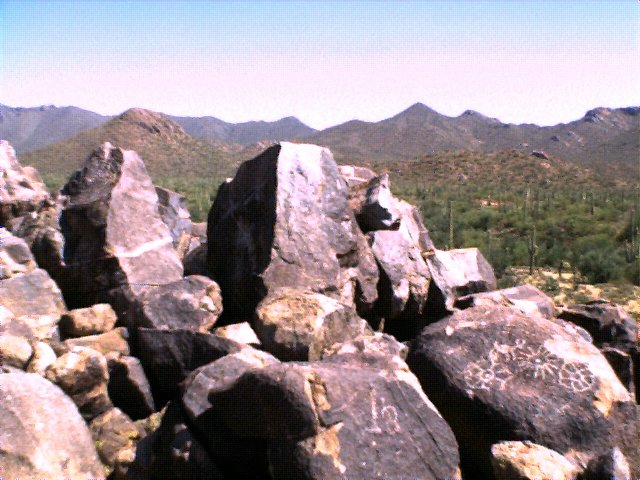
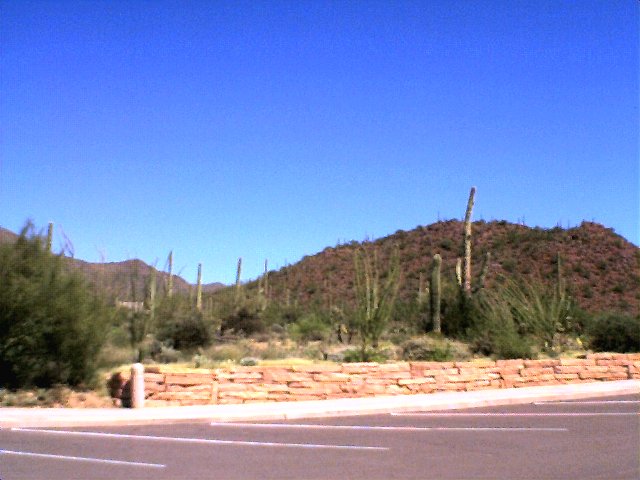
 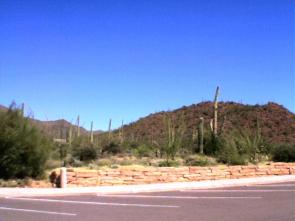 Our next stop was the Saguaro National Park. We decided on visiting the western unit because this area held several unit features like petroglyths that the eastern area did not. It also had a large vistor center which allowed us to get more aquainted with the the park. Saguaro offers a main drive through what was said to be the northern range of the Saguaro cactus. There are many pull outs with scenic views over a landscape that is stark and covered with saguaros growing up to 50' tall. Some of these, the ones with many 'arms' are over 100 years old. At one point, there is a picnic area with a short hike up a small hill where you can see the petroglyths marked in rock more than 500 years ago. Be prepared for high temperatures like we experienced. It was over 100 degrees and this made ordinary surfaces hot to the touch. Our tripods became hot to the touch, so it was agood thing that we had wraps around part of the legs. Our next stop was the Saguaro National Park. We decided on visiting the western unit because this area held several unit features like petroglyths that the eastern area did not. It also had a large vistor center which allowed us to get more aquainted with the the park. Saguaro offers a main drive through what was said to be the northern range of the Saguaro cactus. There are many pull outs with scenic views over a landscape that is stark and covered with saguaros growing up to 50' tall. Some of these, the ones with many 'arms' are over 100 years old. At one point, there is a picnic area with a short hike up a small hill where you can see the petroglyths marked in rock more than 500 years ago. Be prepared for high temperatures like we experienced. It was over 100 degrees and this made ordinary surfaces hot to the touch. Our tripods became hot to the touch, so it was agood thing that we had wraps around part of the legs.
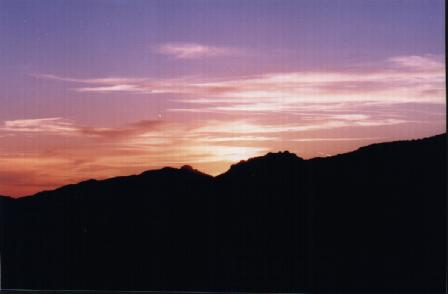
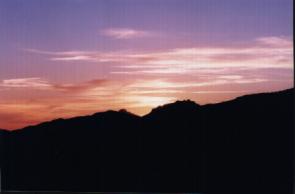 Leaving what came to be known as the 'death heat', we ventured into the higher terrain surrounding Tuscon. We followed the road up to Mt Lemmon. At an elevation of more than 9,000', it was said to be the southern most ski area in North America. No snow this September day, but it was cooler than the valley below. I find it ironic that the village that sits in a small valley at the top of the ridge is called Summerhaven. Its a nice area, temperatures are cooler than the valley and there are actual trees here. Fir trees and aspens help to present an environment that is much like sea level about 1,000 miles north of here. There are many restaurants, shops and picnic areas which I imagine are very crowded in the summer. For us on this Sunday it was not that bad. The temeperature is in the 60's and people here who are not used to this have jackets on as they take a hike in the woods or casually dine at one of the restaurants. Its about an hour drive from Tuscon, but its worth a trip if the heat has become too much for you. On the way down we captured more photos of a nice sunset. Getting back late, we headed to bed early for yet another early rise. Leaving what came to be known as the 'death heat', we ventured into the higher terrain surrounding Tuscon. We followed the road up to Mt Lemmon. At an elevation of more than 9,000', it was said to be the southern most ski area in North America. No snow this September day, but it was cooler than the valley below. I find it ironic that the village that sits in a small valley at the top of the ridge is called Summerhaven. Its a nice area, temperatures are cooler than the valley and there are actual trees here. Fir trees and aspens help to present an environment that is much like sea level about 1,000 miles north of here. There are many restaurants, shops and picnic areas which I imagine are very crowded in the summer. For us on this Sunday it was not that bad. The temeperature is in the 60's and people here who are not used to this have jackets on as they take a hike in the woods or casually dine at one of the restaurants. Its about an hour drive from Tuscon, but its worth a trip if the heat has become too much for you. On the way down we captured more photos of a nice sunset. Getting back late, we headed to bed early for yet another early rise.
|